Solving the annual $240k Excel trap for climate tech financial planning
Background
Financial planners at climate tech companies spend up to 15 hrs/week on data issues and inefficiencies in Excel. This results in errors and a lack of confidence, causing businesses to lose up to $240k annually in productivity.
Challenge
Build a 0-to-1 financial planning platform MVP in 3 months that eliminates Excel's inefficiencies while supporting the dynamic, regulatory-driven nature of climate tech decision-making.
Impact
8 company sign-ups for beta-testing
allowing continuous improvements and solidifying product
35% reduction in time on tasks
from ~2 hours to ~1 hour 20 minutes in preliminary testing.
90% engineering acceptance rate
resulting in a faster development cycle
Team
My Role
Solo designer
UX & UI design
Documentation
Timeline
3 months (2024-2025)
📕
The full story
Aire Labs: Building intelligent tools for climate tech
Aire Labs is building next-generation financial planning tools specifically for climate tech companies, where traditional spreadsheets fall short for the complex, dynamic analyses required to make critical business decisions.
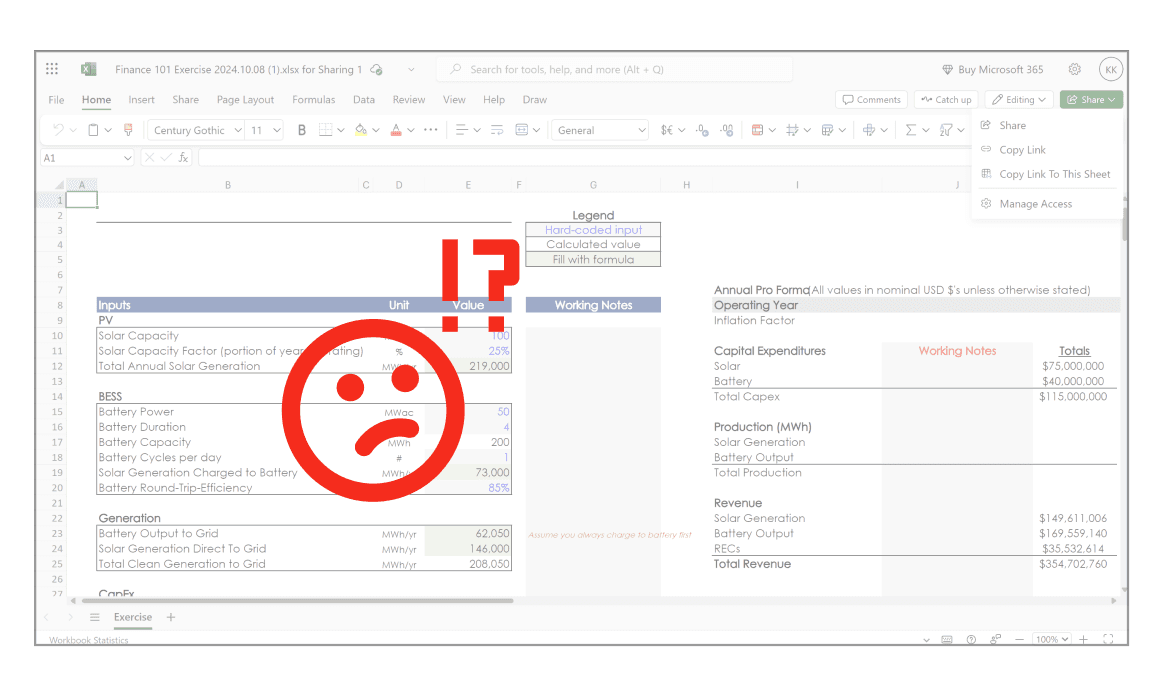
An example of the economic analyses that climate tech project managers do over Excel
0-1 design at a fast-paced startup
As the solo product designer at Aire Labs, I collaborated across product, engineering, customer success & sales teams, leading end-to-end design for the MVP financial planning platform.
7 interviews to understand the problem space I've never worked in
Collaborating with the product and sales team, I conducted user interviews with financial planners across experience levels, plus competitive analysis to identify market gaps and core issues.
100% annoyed with switching apps
Using Excel meant constant context-switching.
71% pointed out the lack of standardization
Excel lacked robust tools for sensitivity analyses.
86% unsure of obsolete document versions
Dynamic nature of climate tech shifted requirements
71% of interviewees
expressed a level of frustration in regards to lack of standardization
🔍 Three core problems costing $240k annually
1.Upto 15 hours weekly wasted on validation
"I spend about 15 hours a week just validating Excel files instead of actually working on stuff I need to." : Analyst at Redfield
Manual data entry, formula errors, and lack of validation tools meant constant double-checking and undermined confidence in outputs used for critical investment decisions.
An example of the economic analyses that project managers were doing over Excel
2.Changing requirements created unmanageable spreadsheet chains
"I can’t keep track of my work" : Project Managers
Users couldn't track obsolete versions, leading to wasted effort, confusion, and risk of making decisions based on outdated data.
An example of the economic analyses that project managers were doing over Excel
3.Excel lacked collaborative infrastructure for enterprise workflows
"Where I start is never where I end up. Government policies change, capital costs shift, and suddenly I have 15 versions of the same file." : Climate Tech Financial Analyst
Without proper version control and sharing capabilities, teams sent files via email, losing track of feedback, struggling to merge changes, and having no audit trail.
An example of the economic analyses that project managers were doing over Excel
🧭 My key challenges from the project
1.Rapid domain knowledge acquisition
What even is a techno-economic analysis🤔? With a non-financial background, I needed to quickly understand complex climate tech financial concepts to design around users' mental models.
2.Designing with no foundation
Aire Labs had no design strategy or materials in place. Every design decision needed validation through research and testing.
3.A 3 month deadline and limited resources
The MVP required ruthless prioritization between table-stakes features and differentiators to hit the deadline.
🏗️ Building the design foundation
Excel lacked collaborative infrastructure for enterprise workflows
"Where I start is never where I end up. Government policies change, capital costs shift, and suddenly I have 15 versions of the same file." : Climate Tech Financial Analyst
Without proper version control and sharing capabilities, teams sent files via email, losing track of feedback, struggling to merge changes, and having no audit trail.
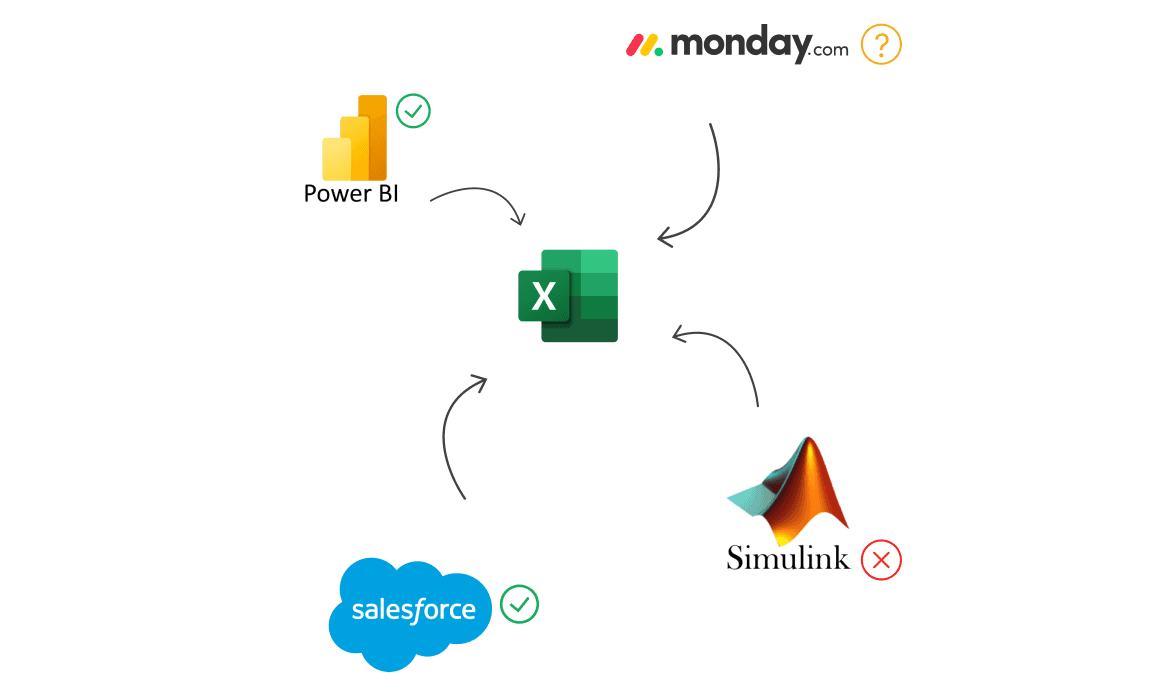
An example of the economic analyses that project managers were doing over Excel
Excel lacked collaborative infrastructure for enterprise workflows
"Where I start is never where I end up. Government policies change, capital costs shift, and suddenly I have 15 versions of the same file." : Climate Tech Financial Analyst
Without proper version control and sharing capabilities, teams sent files via email, losing track of feedback, struggling to merge changes, and having no audit trail.
An example of the economic analyses that project managers were doing over Excel
🎯
Solution Overview
Modular dashboards for dynamic requirements
The Excel Problem: Government policies and market shifts constantly changed analysis parameters, forcing users to duplicate and modify entire spreadsheets.
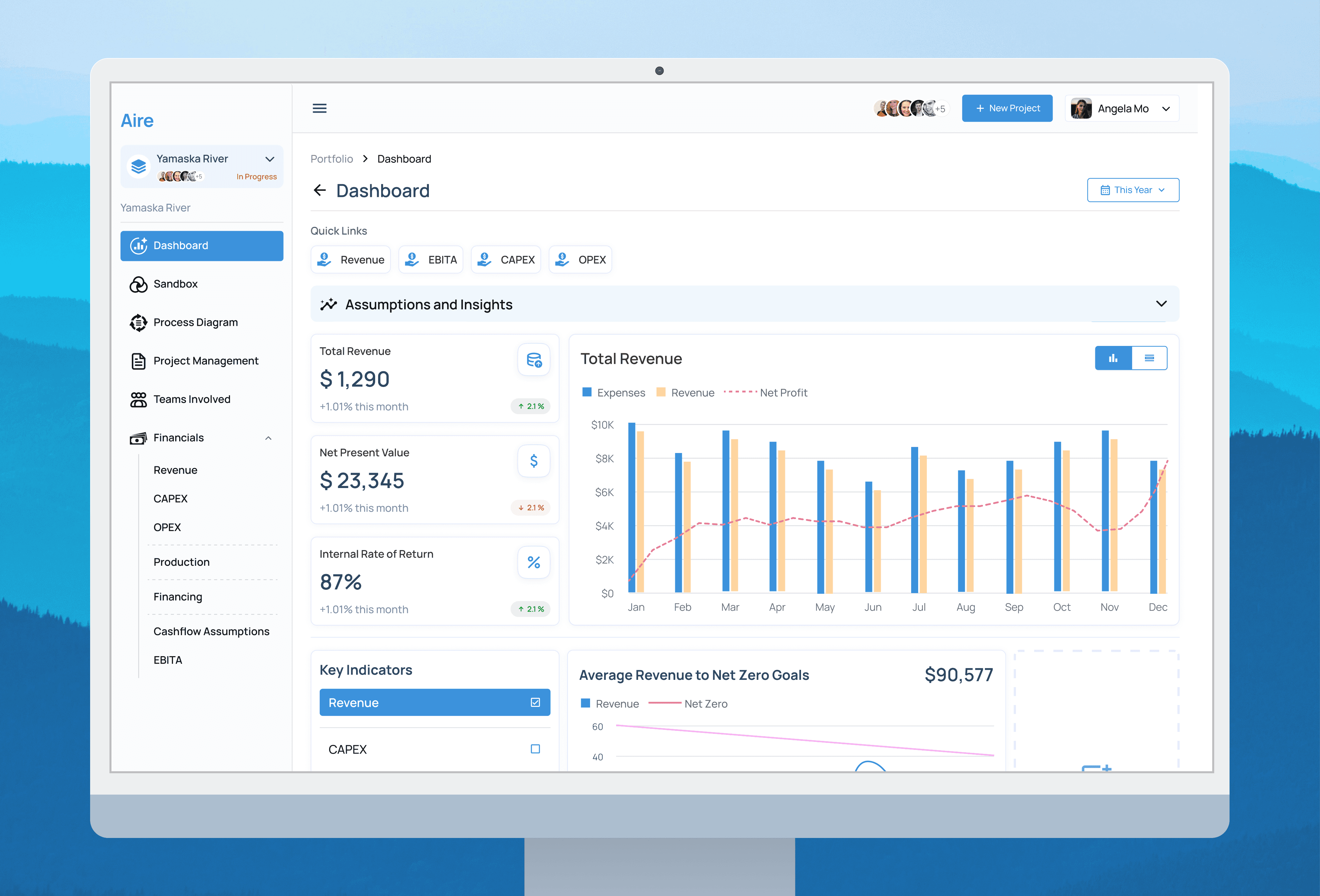
What I designed: Flexible dashboard modules users can customize without duplicating files. Swap data sources, change visualizations, and update models in real-time.
Impact : Saved users ~ 40 minutes per analysis session.
An example of the economic analyses that project managers were doing over Excel
Scenario sandbox for instant sensitivity analysis
The Excel Problem: Poor scenario planning tools made testing "what-if" variables painfully slow and error-prone.
What I designed: Side-by-side scenario comparison with one-click variable adjustments. Test multiple scenarios in minutes, not hours.
Impact : Saved users ~ 40 minutes per analysis session.
An example of the economic analyses that project managers were doing over Excel
Version control to eliminate collaboration chaos
The Excel Problem: Email attachments, lost feedback, no audit trail meant collaboration was inefficient.
What I designed: GitHub-inspired version control with granular sharing. Track every change, restore previous versions, share specific scenarios with stakeholders, internal or otherwise.
Impact : Improved collaboration and easy sharing.
An example of the economic analyses that project managers were doing over Excel
These inefficiencies led to problems within the workflows and up to $240K annually in lost time to businesses
Inaccuracy in data
Manually tracking data in Excel is error-prone
Changing project requirements
Poor Scenario Analysis
Difficult to customize and report for each scenario
Hard to keep track of duplicates
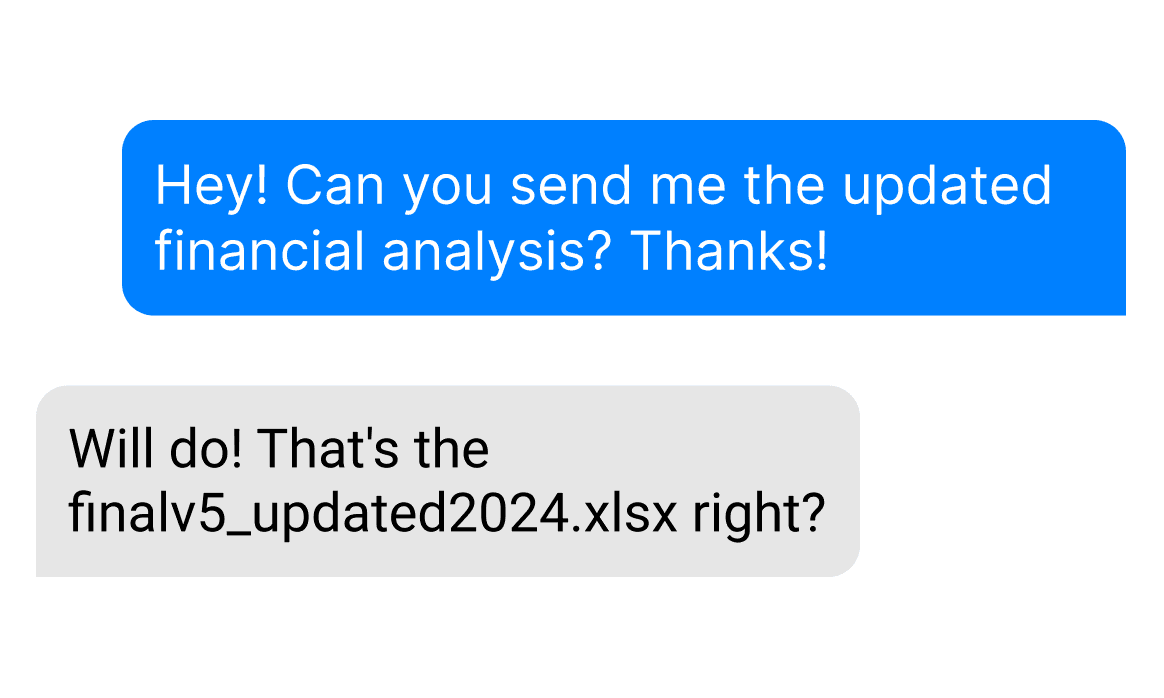
Inefficient collaboration
No easy way to retrieve and search old audits
Lost feedback between mails
Modular dashboard that allows users to change data sources and visualizations
The problem: Government policies and market shifts constantly changed analysis parameters, forcing users to duplicate and modify entire spreadsheets.
What I designed: Flexible dashboard modules users can customize without duplicating files. Swap data sources, change visualizations, and update models in real-time.

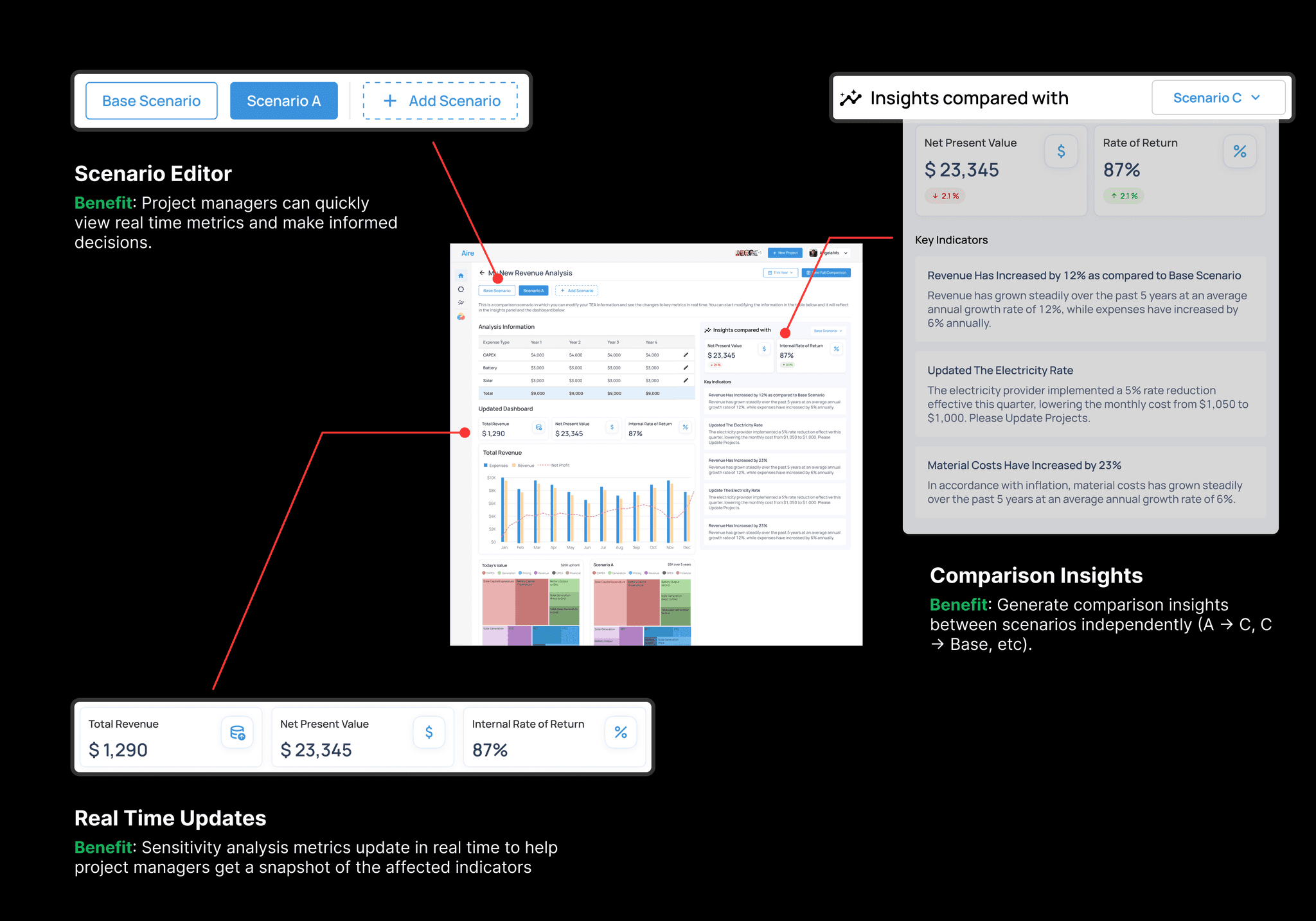
Final designs addressing poor scenario analyses
An efficient and simple sandbox for financial analysis, allowing quick edits and exports
Teams could now explore scenarios with ease. Want to see the impact of a 20% drop in material costs? Click. Send alternate models to investors and stakeholders? Click, click. No more duplicated spreadsheets.
Final designs addressing lack of collaborative tools
Versioning and robust sharing tools to end email chaos
Inspired by tools like Atlassian and Github, I prioritized page-level sharing and robust version control, ending the chaos of endless email chains and conflicting file versions for stakeholders and investors.

So how did
we get there?
I believe every project has something for me to learn and no design process is set in stone! This project in particular, cut both ways and required me to fail often and learn quickly.
Process
Research insights pointed to workflow complexities
Startups move fast—tight timelines, limited resources. With just three months for an MVP, I put together 2 week sprints, starting with 7 user interviews with individuals and professionals of different levels and backgrounds.
"Planning takes too much time"
Excel lacked the tools needed for robust sensitivity analyses required by project managers, who had limited time and resources for personalized attention.
expressed a level of frustration in regards to lack of standardization
"I can’t keep track of my work"
Project managers across the board pointed out how using Excel as the primary tool meant switching between different tools for tasks like analyzing, reporting, and sharing.
found it frustrating to switch between apps to see their workload.
" Where I start is never where I end up"
The ad-hoc nature of ClimateTech meant that things like government policies affected the company's metrics. Every new change meant duplicated and redundant spreadsheets.
Were unsure of the how many obsolete versions of their document existed
Now that user needs are identified, what even goes inside an analysis?
Designing enterprise solutions with a non-financial background, I had to rapidly learn concepts required to understand these complex workflows. "You'll be drinking from the firehose," the CEO said as I began countless Google searches and extensive reading of articles and research papers
The initial strategy meeting focused on understanding users, stakeholders, and their familiar workflows to define product features. This aligned the team, uncovered potential issues early, and made the ideation process feel smooth and manageable.
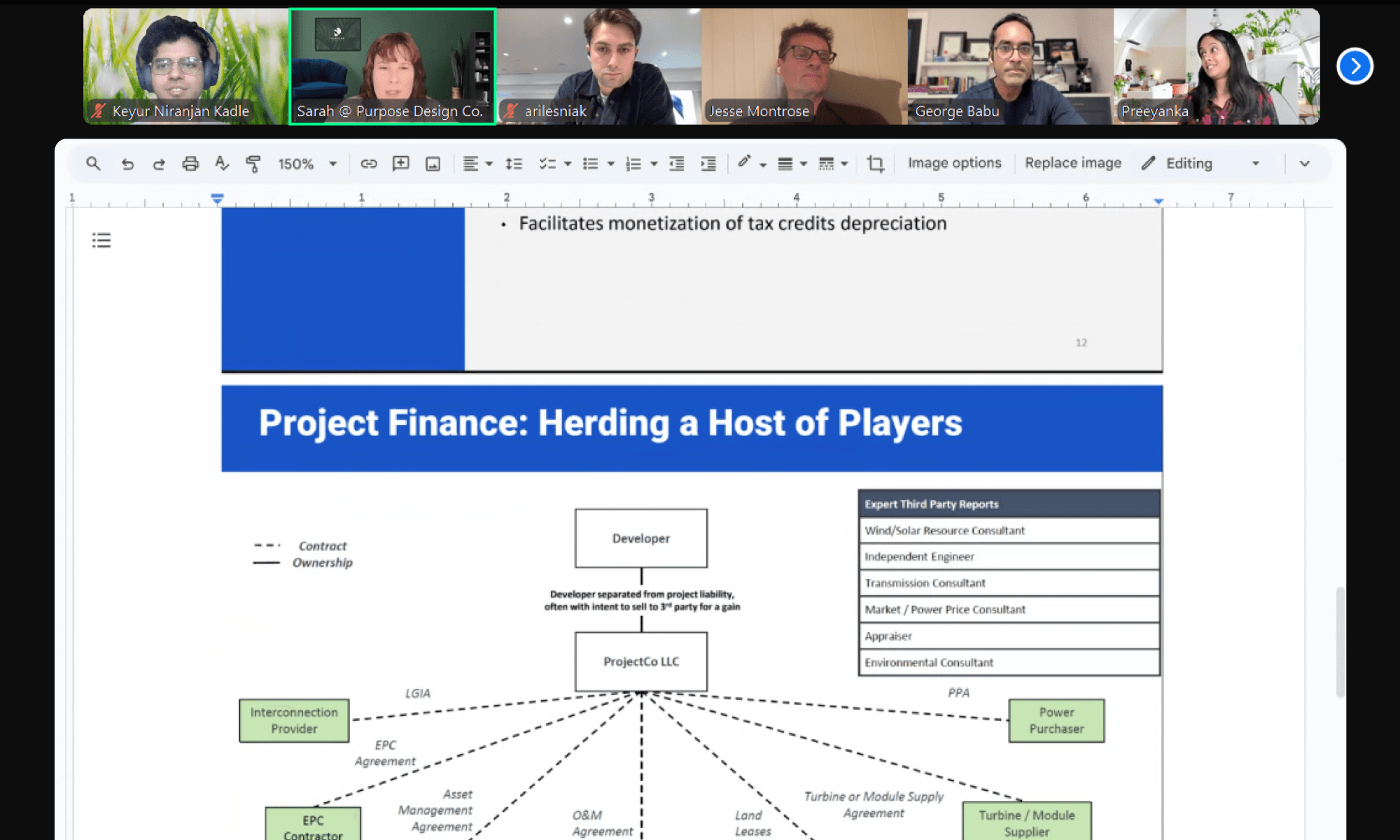
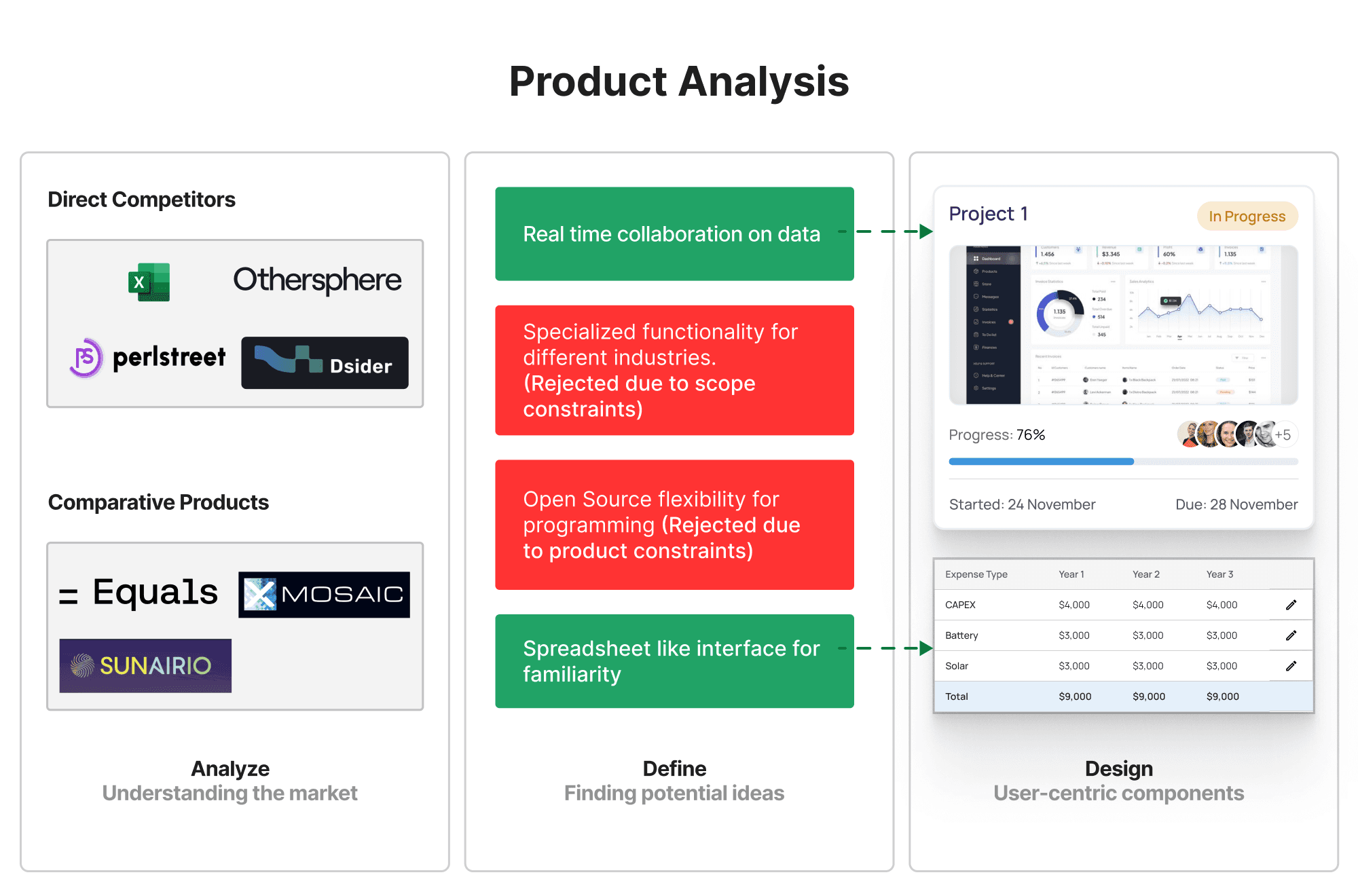
The product analysis helped us refine the design by building on current feature iterations found in competitors while saving precious time ideating.
Aligning product strategy to prioritize features and product roadmaps
Identifying table stakes and differentiators
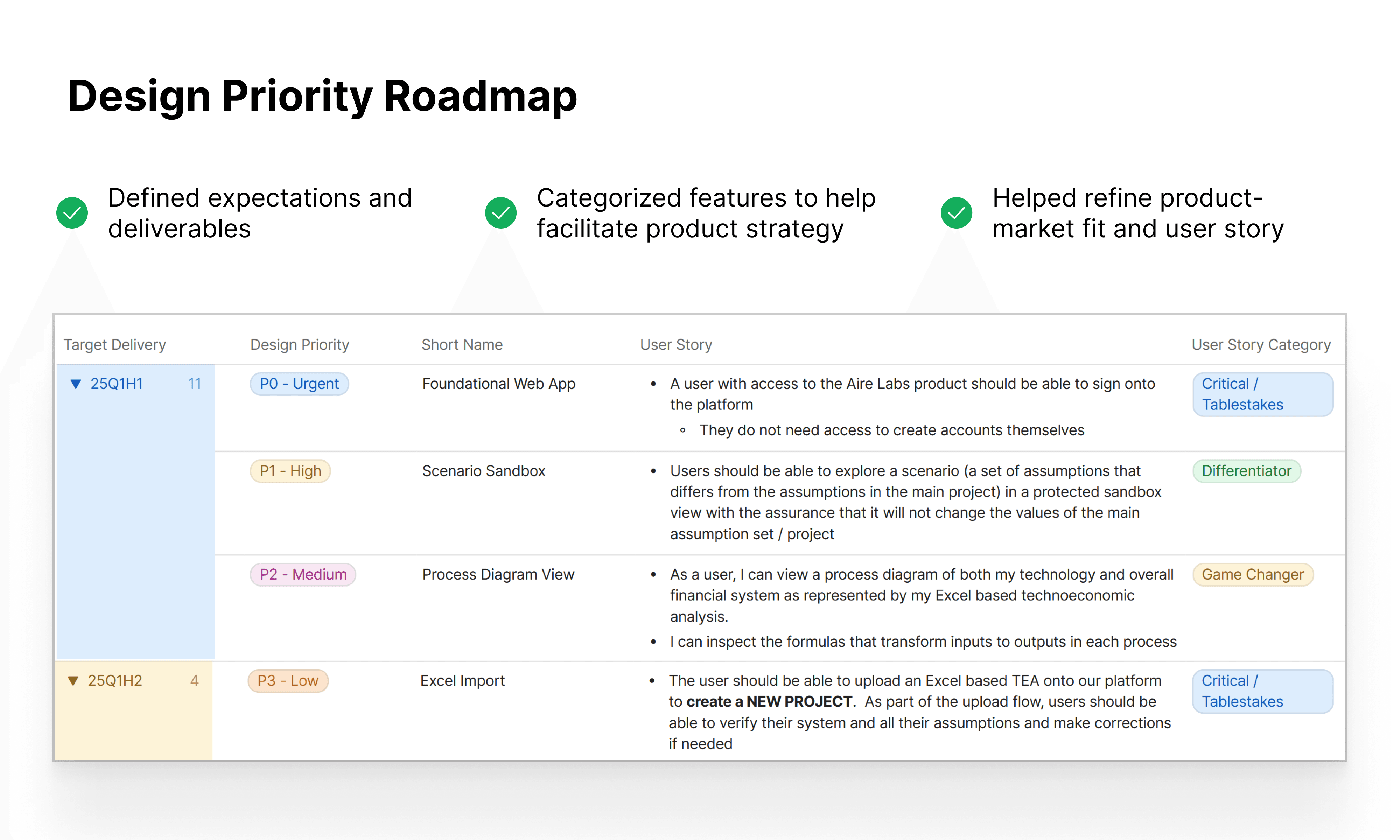
With the clock ticking, we needed to be strategic about what we built first. I worked with the team to put together a design document that detailed features and roadmaps, helping define the scope.
This Coda document was crucial in preventing scope creep and helped establish manageable modules to meet the deadline.
Some pushback to embrace the startup mindset
During feature ideation sprints, I initially held back, self-editing ideas to fit constraints—a habit from my technical background. But the team encouraged open exploration, prioritizing rapid creation, testing, and iteration. This shift aligned perfectly with the startup’s ethos and pushed me to embrace a more experimental approach.
Learning
Putting all the pieces together
Using the established information architecture and visual hierarchy, I rapidly created and refined wireframes to achieve the visual fidelity needed for developers to begin implementation and for user testing to validate our direction.
Following the F-Pattern due to primarily western user base, I created simple visual guidelines to inform wireframes
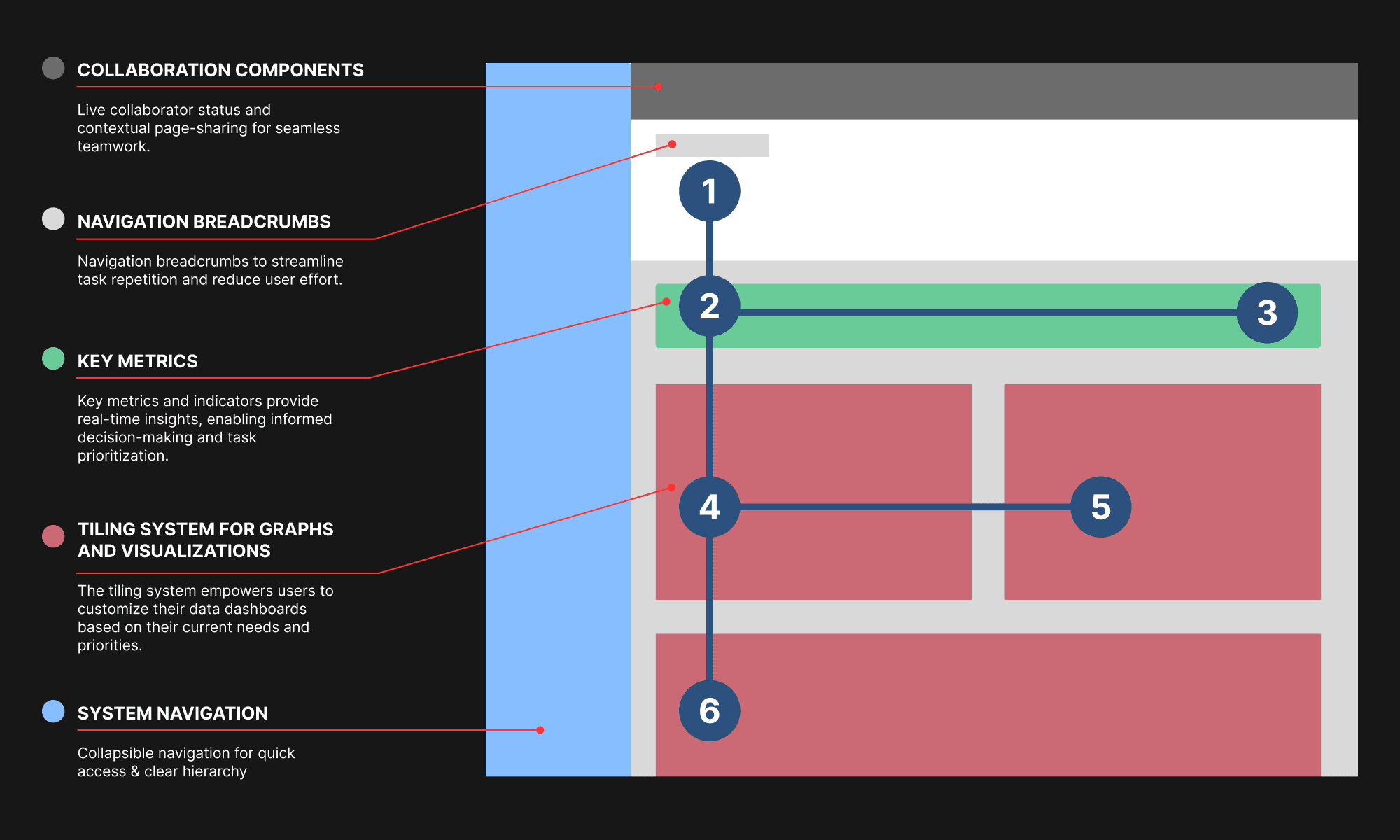
An example of the iteration process for data visualization dashboards across sprints

Outcomes
Building efficient tools where just the 'default' doesn't work
As my contract ended, I checked in with the team. They were already documenting improvements for future iterations while developers built on our foundational designs. An awesome experience with a promising team.
Something I'd do differently…